The First-Time Manager Problem Nobody Trains For

Updated: Aug 28
"I was brilliant at my job. Now I'm bad at a job I didn't know I'd taken."
A newly promoted team lead in a BFSI client said that to us, six weeks into the role. She was not exaggerating. She had been the top individual contributor on her team. That was exactly why she was promoted, and exactly why she was struggling. The skills that made her excellent were no longer the skills the job required. This post is about that gap: the identity shift every first-time manager goes through, why most training ignores it, and what it costs when you do.
A promotion is an event; becoming a manager is an identity shift most training skips. New managers are handed authority without the communication habits the role demands, and the cost shows up as attrition and stalled teams.
Why isn't a promotion the same as a transition?
Organisations promote the best individual contributor and assume the rest
follows. It rarely does.
Being an individual contributor rewards personal output. You are measured on what you produce. Being a manager rewards something almost opposite: you are now measured on what other people produce.

The instinct that made someone great at the first job, doing the work themselves, faster and better, is the instinct that sinks them in the second. They step in, they take over, they redo. The team learns to wait for them. Output stalls.
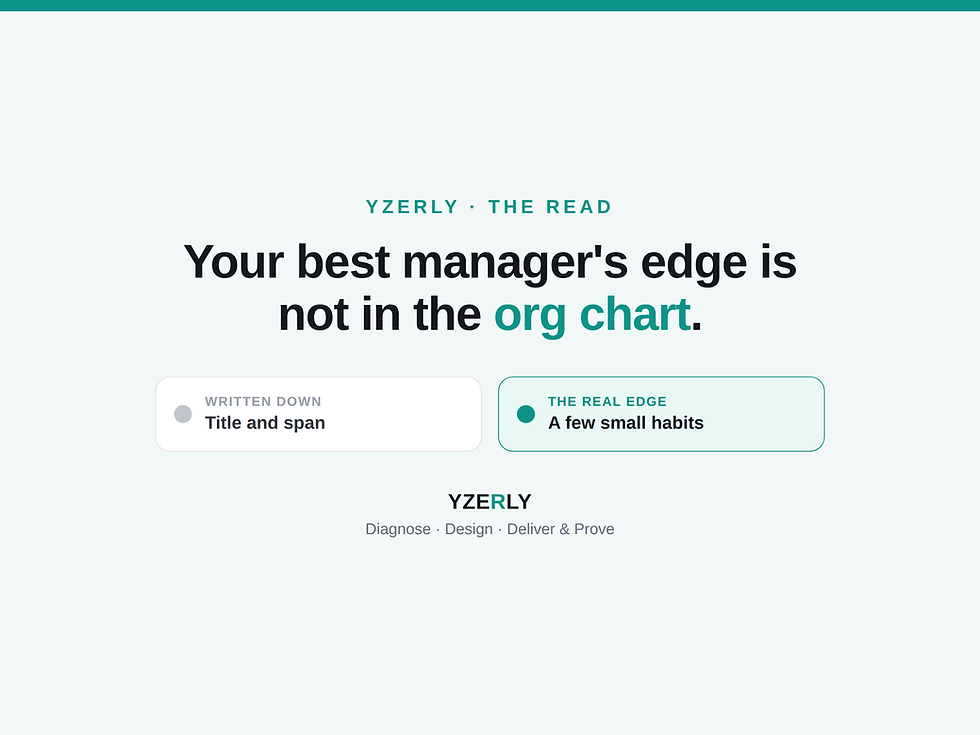
The promotion happened on the org chart in a day. The transition in the person's head takes far longer, and usually happens with no support at all.
What is the identity shift new managers must make?
The hard part of becoming a manager is not learning to run a review meeting or fill in a performance form. Those are mechanics. The hard part is a shift in who you believe you are at work.
For years, the person's worth came from being the expert, the one with the answers, the safe pair of hands. Management asks them to give that up.
Their value now comes from developing others, from asking rather than answering, from being comfortable when someone on their team does a task differently, or more slowly, than they would have. That is not a skills gap. It is an identity gap.
And most people cross it alone, through trial and visible error, in front of the team they are meant to be leading.
Why does standard manager training miss the real problem?
Most new-manager training is content. A module on delegation. A module on feedback. A module on time management. Useful, but it treats the problem as missing knowledge.
The first-time manager does not usually lack the concept of delegation. They understand it perfectly. They cannot bring themselves to do it, because delegating means trusting someone else with work their own reputation used to depend on. No slide fixes that.
What helps is practice in the real, uncomfortable moments: the conversation where you hold back and coach instead of solving, the review where you let a good-enough answer stand. That is behaviour, rehearsed and observed, not content consumed.
What does it cost when a manager transition fails?
When a first-time manager does not make the shift, the damage is quiet and expensive.
The manager burns out, doing their old job and their new one at once.
The team disengages, because a manager who takes over teaches people to stop trying.
Good people leave, and most of them are leaving the manager, not the company.
Escalations climb, because the manager becomes the bottleneck every decision routes through.
None of this shows up as "manager transition failure" in a report. It shows up as attrition, as missed targets, as a team that needs more supervision than it should. The cause is upstream, in a promotion that was never followed by a transition.
Three things to remember:
Promotion is not the same as transition.
The real shift is identity, not just new tasks.
A failed manager transition is expensive and usually invisible until it is too late.
The question worth sitting with
Every organisation has a plan for what a new manager should know. Far fewer have a plan for who a new manager has to become.
So here is the question for anyone who has recently handed someone their first team: did you promote a manager, or did you promote your best individual contributor and hope the rest sorted itself out?
If it is the second, the person is probably struggling right now, quietly, and a structured transition, not another content module, is what would actually help.
Written by Mahesh Tharani. Connect on LinkedIn.


Comments